
Our Impact
For more than three decades, the Chiron Therra Resilience Network (CTRN) has supported individuals, teams, and systems operating in high-pressure, high-impact environments. This work has been applied across public safety, government, education, healthcare, corporate leadership, nonprofit organizations, and settings with international reach, including contexts shaped by crisis response, cumulative stress, organizational transition, and long-term recovery.
CTRN’s impact reflects sustained, real-world application in environments marked by complexity, resistance, and consequence. Across these settings, the work prioritizes practical relevance, discernment under pressure, and approaches that honor both human capacity and systemic realities.
The following case example offers one illustration of how this work has been applied within a mandated, statewide training environment.
Case Example: Statewide Personal Resilience Training
When the Governor of Oregon issued a statewide mandate for personal resilience training for all sworn personnel of the Oregon State Police, Anne E. Kellogg was invited to design and deliver the program. The initiative was implemented over the course of a year and included ten, eight-hour, in-person trainings delivered to approximately 80 troopers per session.
The training was introduced within a professional environment shaped by sustained operational demand, cumulative exposure to critical incidents, and high expectations for practicality and relevance. Participation was required, and the audience represented a wide range of roles, tenure, and experience across urban, rural, and specialized units.

Program Design and Delivery
The training was structured around the principles of Simplicity Reconnect and emphasized evidence-based, embodied practices selected for immediate applicability in high-pressure settings. Content was presented with clear rationale and framed for use both on duty and in daily life.
Core elements of the program included breath-based regulation, movement and physical awareness, guided visualization, sensory engagement, and nature-based attention. These practices were introduced through experiential learning rather than instruction alone, allowing participants to test, adapt, and integrate tools in real time while remaining grounded in a shared structure.
The design supported both individual reflection and shared participation, creating space for personal insight alongside collective learning and exchange. Sessions were designed to be active, accessible, and engaging, supporting sustained attention and participation across diverse learning styles and group sizes.

Outcomes and Participant Response
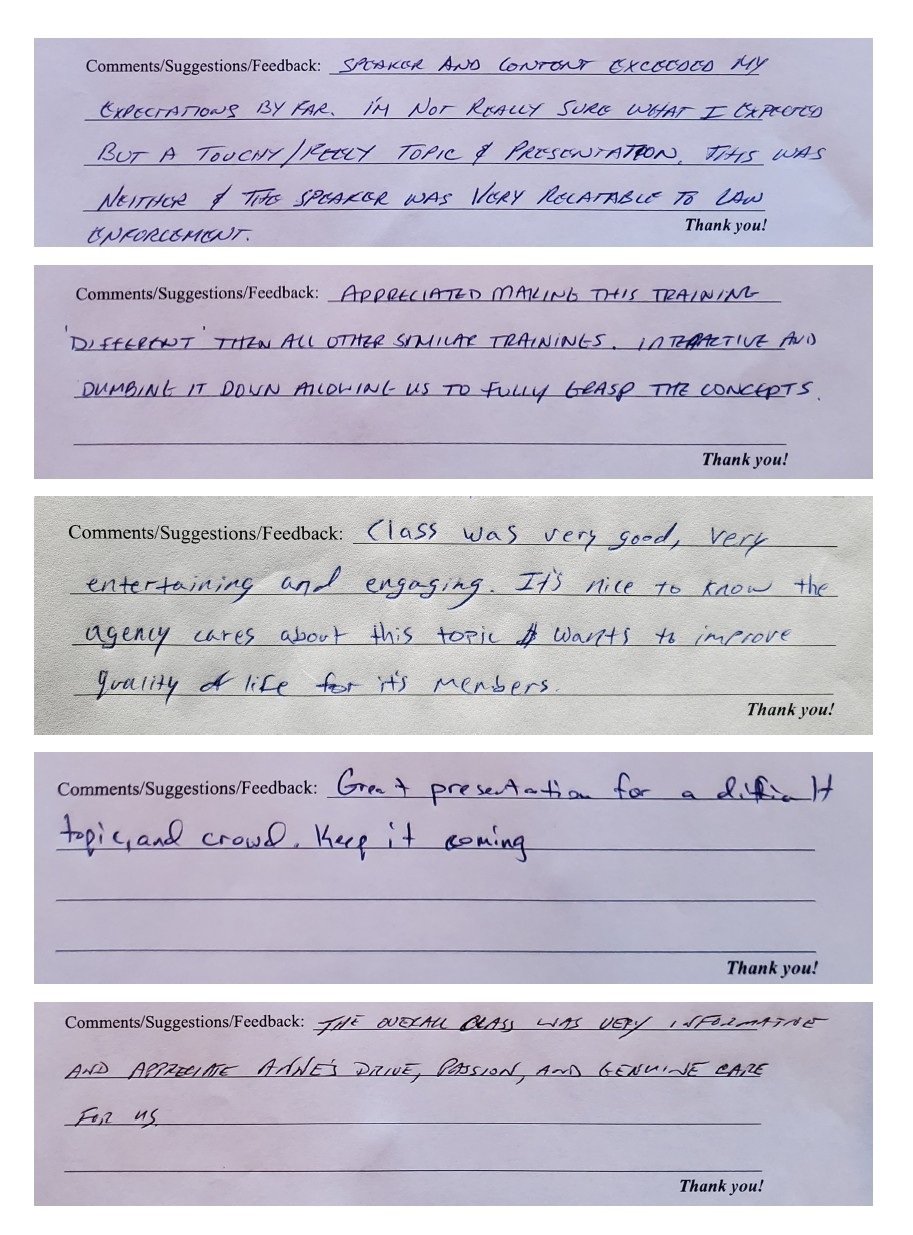
Across the statewide rollout, the program received a 4.8 out of 5 presenter rating. Written feedback reflected strong engagement, perceived relevance, and practical value. Participants frequently noted the usefulness of the tools in both professional and personal contexts, as well as appreciation for the balance between scientific grounding and experiential learning.
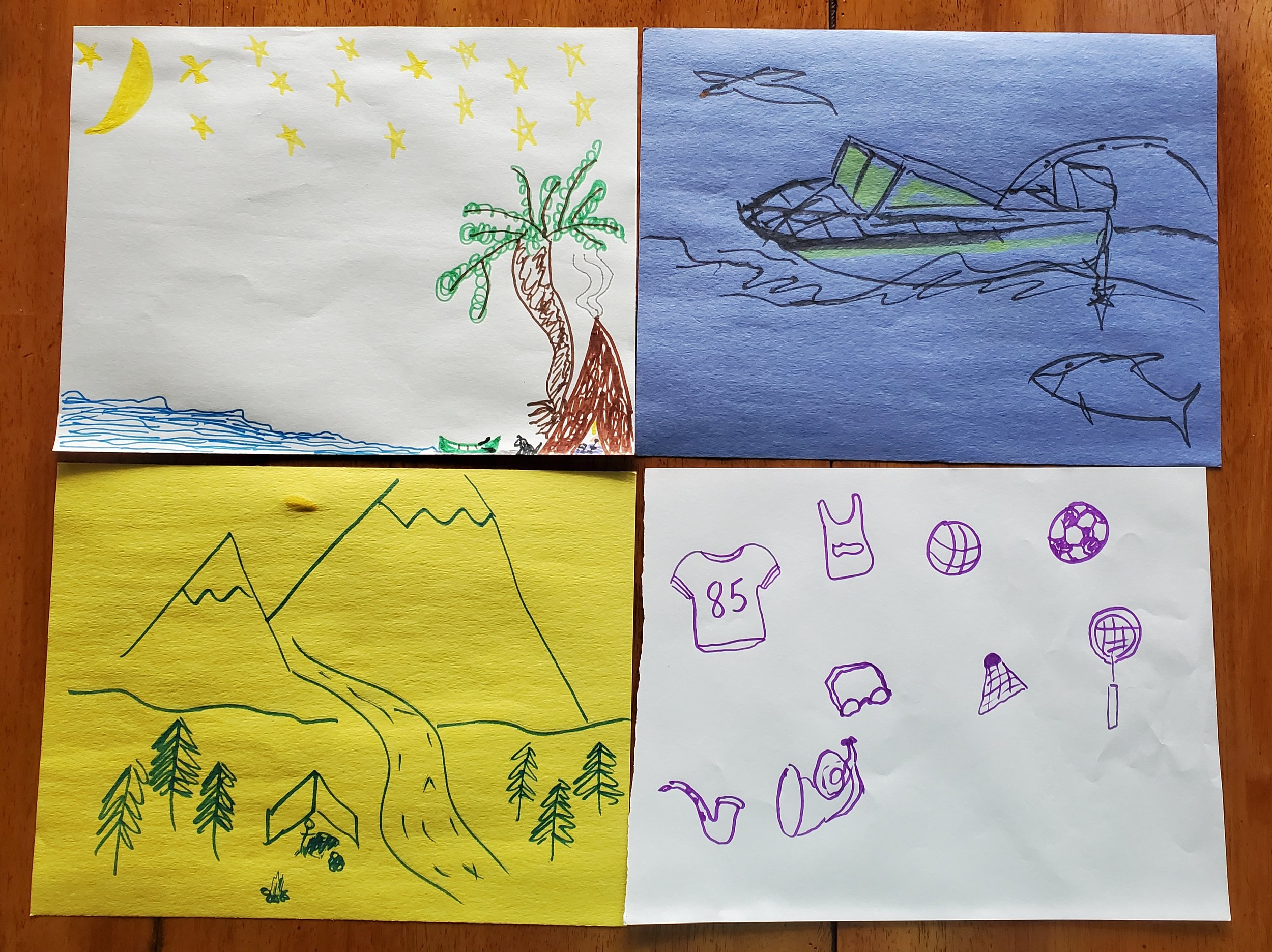
Below are visual responses created by participants during the training, including drawings from an experiential exercise known as the “Happy Place.” The exercise integrates visualization, creative expression, and shared dialogue, supporting reflection and meaning-making through multiple forms of engagement among peers.
Also included are handwritten notes shared by participants in their own words, offering direct reflections on the training as a whole and its relevance to their professional and personal experience.






Breadth and Transferability of Application
While the Oregon State Police initiative represents one high-demand application, the design principles and practices reflected here are not profession-specific. The work demonstrates how complex material can be delivered effectively within skeptical or high-pressure environments when guided by clarity, evidence, and respect for culture and context.
Across more than three decades, this same framework has been applied through multiple formats, including keynote presentations, facilitated workshops, leadership coaching, continuing education, on-scene and post-incident support, and nature-based experiences at The Ranch. Each offering is shaped to meet the scale and setting of the audience, whether working with small groups or large convenings.
Across sectors including education, healthcare, nonprofit leadership, corporate settings, and public-facing events, the emphasis remains consistent: practical tools, embodied awareness, and approaches that support discernment, steadiness, and sustained functioning under pressure.
Additional reflections and examples from a range of trainings, presentations, and learning environments are available here.